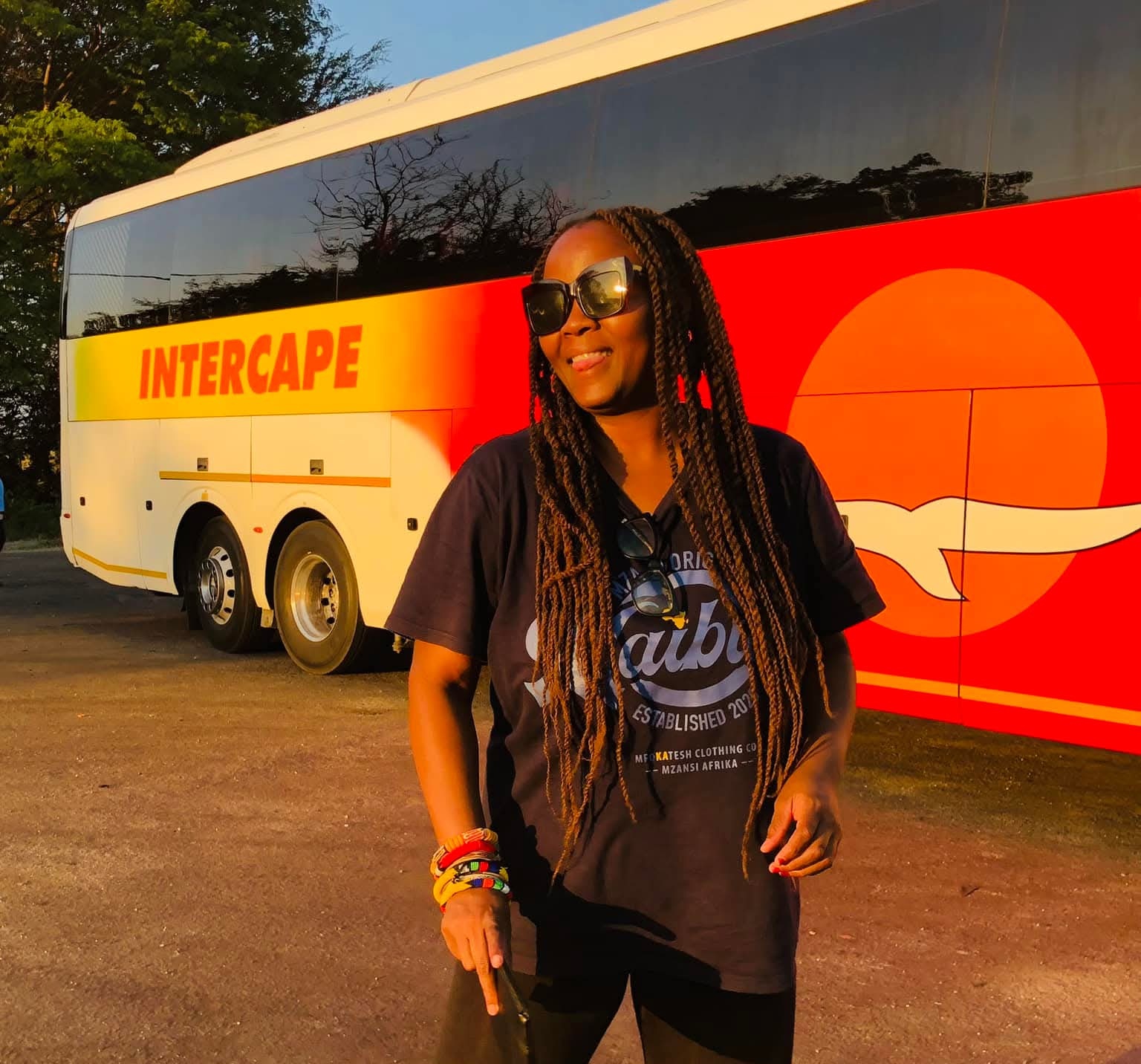
What happens when you choose the scenic route through Southern Africa.
In a world where digital navigation leaves little room for the unexpected and planes whisk us in cushioned comfort, there lies an unsung protagonist of travel, the humble bus. I am an advocate for bus travel, but more importantly, I am an advocate for budget travel. In the world I live in, I would rather travel with a bit of inconvenience than not travel at all. I am drawn to destinations, but I am fast becoming a believer in the saying that travel itself is the destination. I stubbornly refuse to wait until I have the financial muscle to travel first class and sleep on high-thread-count linen. I simply must travel.
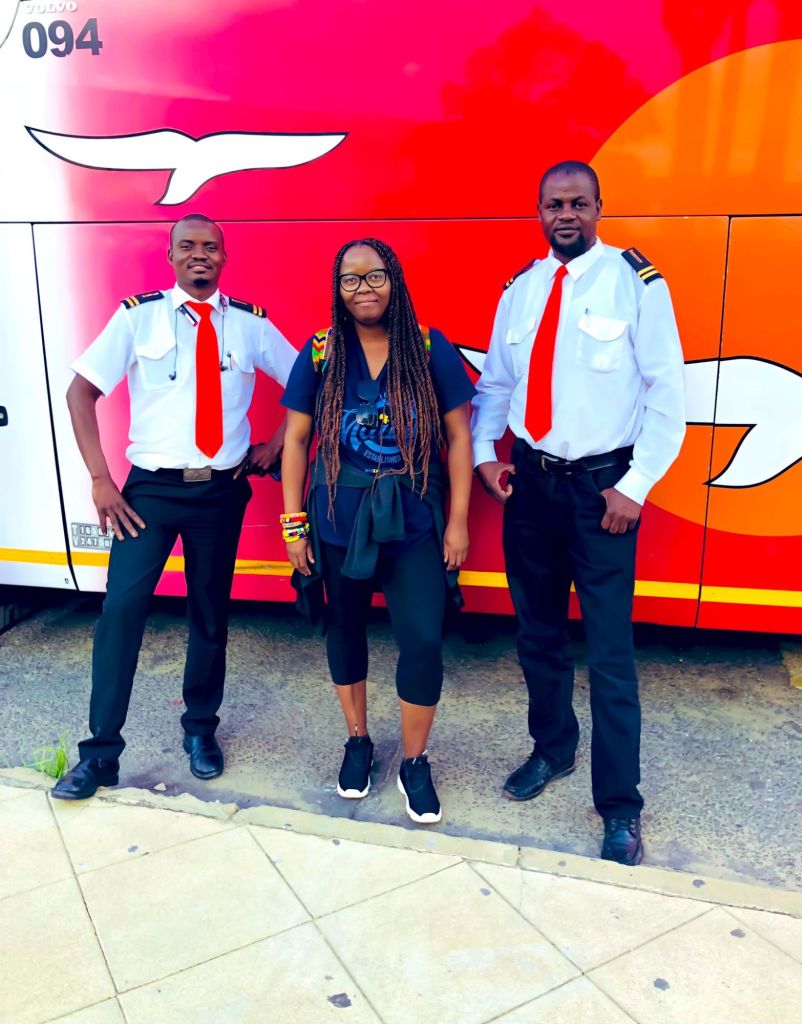
The gods of wanderlust recently called out to me. This time, a bus trip from Durban, South Africa to Livingstone Zambia. I have been to Livingstone before. It was only for two nights as I was passing through from Malawi to Namibia. That was possibly the best bus trip I’ve ever taken, but we’ll talk about it later.
So here I was, once again drawn to the romance of the open road, falling in love with the idea of being alone within a crowd, facing the same direction, with some of Africa’s views are rushing past. This kind of solitude appeals to me. I usually spend this time mindfully taking in the scenes, thinking and planning and simply overthinking my life.
I am no stranger to the difficulties of travelling by road in the SADC region, the shared stories and the temporary companionships that come with bus journeys. I live for this.
On some level, I expected this particular bus ride to be an extended reflective moment, what with all these hours I was about to spend on the road; 36 hours to be exact. On the contrary, it was filled with humour and a bit of drama, both of which are sometimes welcome.
My journey begins in the beautiful city of Durban where nostalgia almost cripples me. I spent ten years of my life in this city. I might even say this is where I became a woman. On a less vague note, this is where I was introduced to my artistic side. This is the city that taught me about poetry sessions, drumming circles and recitals. It was in Durban that I learned about the complications and simplicity of jazz appreciation. Those memories, coupled with the whiff of the ocean and the deliciously humid air leave me with more questions than answers. “Why did I ever leave Durban?”’ for example.
I have never taken a cross-border bus trip with Durban as my departure point before. I am more familiar with Johannesburg’s infamous Park Station but I have no worries because I booked my ticket with the reputable Intercape Bus service service. I recently learned that I can now travel from South Africa to Zambia using this bus service. Of course, the journey is punctuated by stops in Upington in the Northern Cape and Namibia’s capital, Windhoek with the final destination being Livingstone Zambia, the home of Victoria Falls.
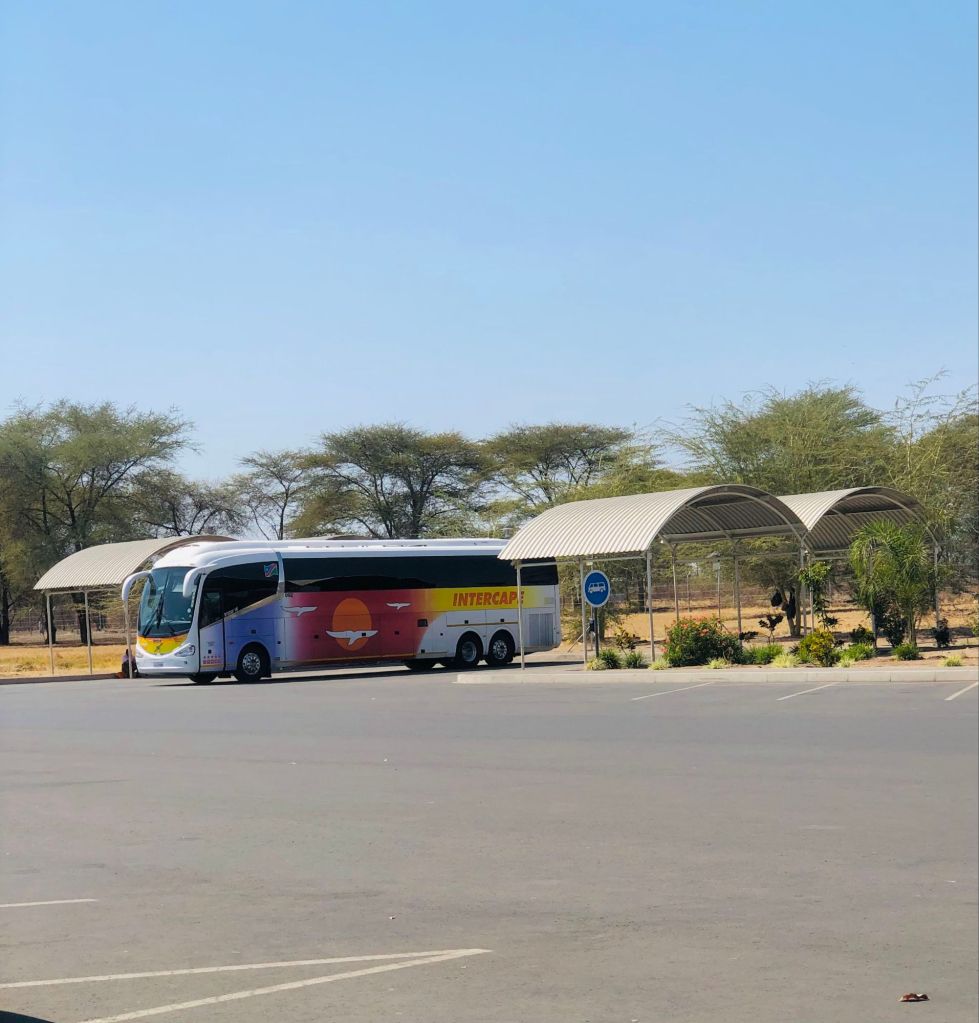
After waiting a few hours at the station, the bus finally arrives. At this point, I’ve made friends with two people. An older white lady who is going to Pretoria to obtain her police clearance for her permanent move to the UK. Her children live in the UK, she says, and she is finally making the move to be with her children. While she is in Gauteng she is planning on slipping in a short trip to the Kruger National Park because she will “miss the animals the most” when she moves abroad.
The second is a tall, good-looking, black man who looks to be in his mid-forties. He missed his flight to Joburg because his shuttle was late. He’s very annoyed with himself and he makes sure everyone hears about it. He is also somewhat of a comedian and doesn’t mind people looking at him. He proves this by imitating, out loud, Trevor Noah’s comedy lines about South African airline workers. “Attention passengers!’ he repeats and then laughs at himself. It’s all awkward, and uncomfortable. But he’s beautiful to look at. His small eyes that form a long line when he laughs are just adorable.
Check-in is pretty seamless as we leave Durban at the expected 20:00. The bus is not full, which means I will sit alone, at least for now. The gods of wanderlust are looking out for me. This is always welcome because I get to sit comfortably, especially for long trips.
Just as we are approaching Pietermaritzburg on the N3, the bus comes to a complete stop. There’s an accident nearby. We stop there for at least 45 minutes. I now know that the issue was because of a truck that had collided with a car.
By the time we arrive in Pietermaritzburg, it is clear as day that our drivers are not the nicest people in the world, particularly when interacting with their passengers. When new passengers jump on the bus in Pietermaritzburg, the drivers start shouting at them. After all the shouting people start whispering to each other because no one wants to even ask a question. Every answer is dipped in a bit of sarcasm and outright insolence. This carries on until we reach Upington. Spoiler alert, we do reach Upington. It’s quite tense on the bus, we can’t even laugh at the driver when he mispronounces “boarding pass, by calling it “body parts”. We can only chuckle to ourselves and exchange looks, otherwise no one wants to be at the receiving end of The Wrath of the Drivers.
I sit quietly and I plead with the gods of wanderlust that I don’t have an issue that will need me to deal with these drivers because it will end in tears. Mine, probably. The trip is mostly uneventful, except for the dramatic views whizzing past us. It’s dry season and everything looks a bit dreary but some places look golden and the grass reminds me of Sting’s Fields of Gold. I find the song on my Apple Music to add a soundtrack to the road trip.
We drive past Welkom, Bloemfontein, Kimberley, Kuruman and small towns I’ve never heard of like Barkly West (I know Barkly East) and Danielskuil. In Kimberley, our bus driver leaves a passenger behind because she is late, even though the bus has not left the station. The woman pleads with the driver while the other driver says, “mshiye” meaning leave her behind. Fortunately for our latecomer, the bus stops at a filling station a few meters from the bus stop and she follows and finally catches the bus. What a relief.
About 10 kilometres before we arrive in Upington, the bus is suddenly stopped by the police, in civilian clothing. A female police officer gets into the bus and introduces herself, continuing to tell us the reason why the bus was stopped. “We’ve received a tip-off that someone on this bus is transporting illicit goods. This exercise will not take long, we will get the canines to look at the luggage compartment and then request all of you to get off the bus while we search”. Hayibo! We all look at each other as if to try and decipher who has the look of a criminal.
We all wait with bated breath as the police dogs conduct their business in the luggage area. Within two minutes, the police officer comes back again, this time asking for Mr Malan. Mr. Malam follows the police officer. Mr Malan is a short little white man dressed in khakis. His hair is grey and his eyes a a bit shifty. Mine would be shifty too, if I would be called out of the bus like that. Mr Malan is back before we can finish gossiping about him, whispering “Die hond het my biltong geryk” which translates to “The dog smelled my biltong”. And with that, the police officer comes onto the bus again and announces that we are not the bus they are looking for. The bus they are looking for will be coming from Johannesburg and not Durban. It can’t be too far behind us.
We arrive in Upington just as the sun is getting ready to retire. Upington looks beautiful in this shade of orange. To be honest I have been fantasising about moving to Upington recently. This is solely based on my love for small towns and their quiet charm. In recent months I’ve extended my job search to Upington. I arrive as shops are closing and everyone is rushing home. I must look strange because, for some reason, people are staring at me. I am certainly darker and bigger than most people here. But if I’m being honest it’s probably the suitcase I am wheeling around that screams “not from around here”!
I plan to get to the Namibia border as soon as possible. I can’t afford to spend the night here because it’s expensive. So, I ask the first taxi driver I see about taxis to the border. There aren’t any but I can find trucks and private cars going that way. He’s very patient with me while I ask very elementary questions. He knows I’m not from here. He even makes phone calls to ask other friends of his. He spends way too much time with me showing me nothing but grace and kindness. I am not more convinced than ever that I could live in Upington. In the end, he tells me to take a taxi to a well-known filling station along the Namibia road. That is where most people stop on their way to Namibia. I do exactly as he says.
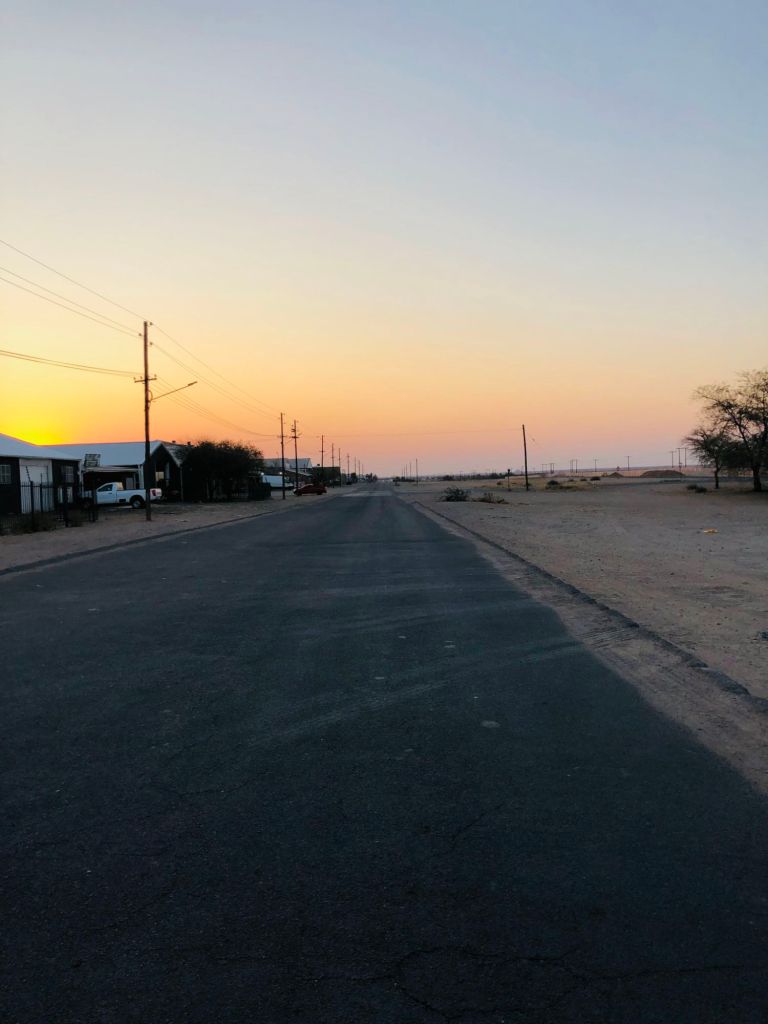
I arrive at that filling station as the sun is yielding to dusk. I ask the petrol attendants about transport to Namibia and they confirm that I am at the right place. A sigh of relief. At least I can now relax and plan the next leg of my trip. While I wait for transport I learn that there is a truck stop where drivers usually take a warm shower. And since I’ve been on the road for at least 21 hours I decide that a shower would be a wonderful idea. The showers are surprisingly clean. I take a quick shower and get back to my hitchhiking. I can’t afford to be snobbish about showering. I call myself a budget traveller which is another way of saying “broke traveller”.
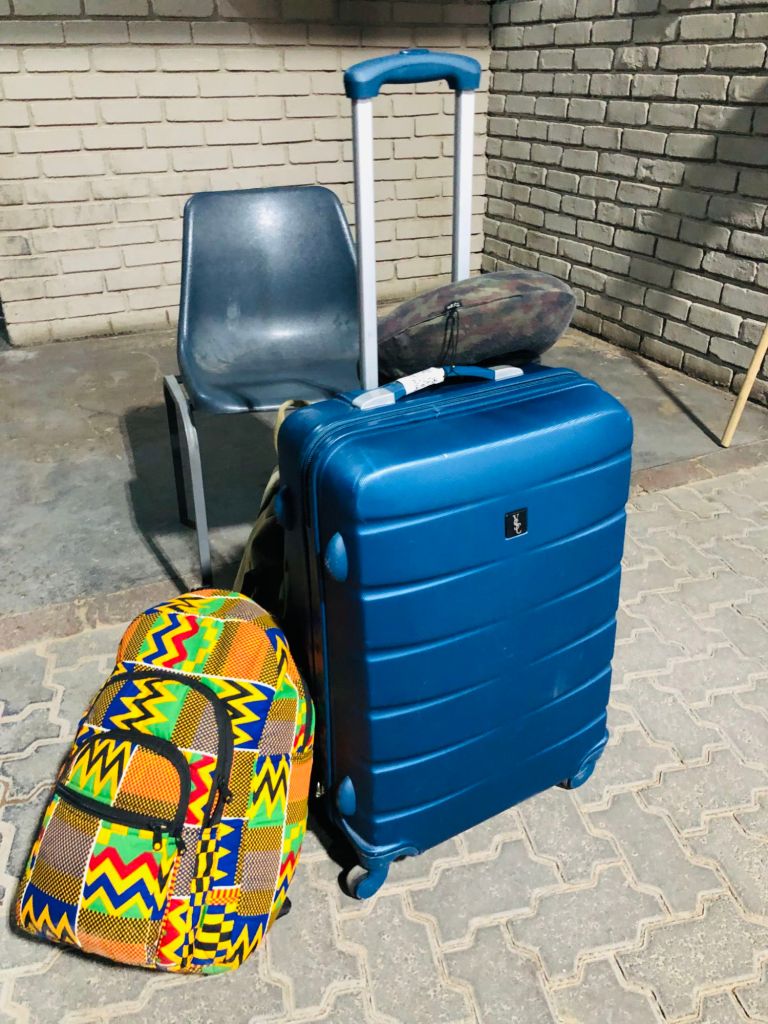
I eventually find a truck travelling to Namibia but it is not going to Windhoek, he’s going to Luderitz. He travels between Kathu and Luderitz often, to transport Manganese. We agree that he will leave me at the border where I will be more likely to find transport to Windhoek. After a short exchange, I get into the truck and we drive about 147 kilometres to the Ariamsvlei border. It’s quite a pleasant drive. The roads are quiet and we only meet about five cars in a 147 km stretch. The driver’s name is Natwange and he’s Namibian. We chat like old friends, about South Africa and Namibia. He doesn’t understand why I’m putting myself through these long roads. When I tell him that I love to travel this way he doesn’t believe me. He then asks me the question I have been asked the most since I became a travel writer, “Don’t you have a husband? Children?” I’ve learned to evade this question, but I indulge him. He’s not satisfied with my answer. They never are.
It’s about 21:30 when we arrive at the border. Passport control is incredibly simple. After I’ve been stamped I chat to one of the police officers about finding me a lift. Within 30 minutes, he’s found me a lift. Honestly, I cannot believe how simple this is. I keep thanking the gods of wanderlust who have been doing a sterling job in collaboration with my ancestors.
The lift is a Sprinter bus travelling to Windhoek with 14 women from Kuruman. After they drop me in Windhoek, they will proceed to Henties Bay to begin their 8-day holiday on the bay. I am told they have been drinking since lunchtime and it shows. By the time I meet them, they are in party mode. They welcome me with kindness and booming voices. I’m not worried because I’ve been around black joy and it doesn’t bother me. My seat is not the most comfortable but it will do. After driving a short distance from the exit gate we reach the entry point into Namibia.
This is where the trouble starts. When we reach the counter there are two immigration officers, male and female. They are chatting among themselves and chuckling. I might be wrong but I think they are chuckling about our grand entrance. Everyone starts filling out their immigration forms. As soon as I’m done with mine, I go to the counter and the male officer helps me. He asks me a couple of questions and proceeds to stamp my passport. As he hands me my passport, I hear the female officer shouting to one of my travel mates, “But you can’t call me stupid. You can’t call me stupid!” Jesus!
It turns out one of the ladies I’m travelling with told the immigration officer that she was being stupid. The story goes: the immigration officer told her that she was not at the correct counter because she wasn’t standing directly in front of her and therefore she wouldn’t be able to help her until she was standing right in front of her. Granted the officer was being petty because the lady wasn’t too far away from her and she could still reach her. “Just for that, I’m refusing you entry into my country”. We spent the next two hours begging the immigration officer to please forgive her because there was no way the group would leave her behind. Everyone had paid full price for the holiday. At this point, I am contemplating getting another lift because I don’t want to be late for my next bus in Windhoek. Our begging receives favour from the immigration officer and we are on our way.
We are about to drive for 12 hours to Windhoek. This comes as a surprise to the ladies because none of them had checked how far their destination was. They thought once they crossed the border the destination would be a couple of hours. I was the bearer of bad news because when you travel the way I do, you need to befriend Google.
The next part of our trip goes without issues until we reach Windhoek. When we reach Windhoek, the driver asks me where he can drop me off. I tell him to drop me at the bus station where I will find a bus to Livingstone.
I arrive in Windhoek with at least two hours to spare. I quickly go to the mall to buy some food and a few other supplies for the road and then I make my way to the station. I arrive just as my bus is boarding. We depart promptly at 15:00. We will arrive in Zambia at 15:00 the next day.
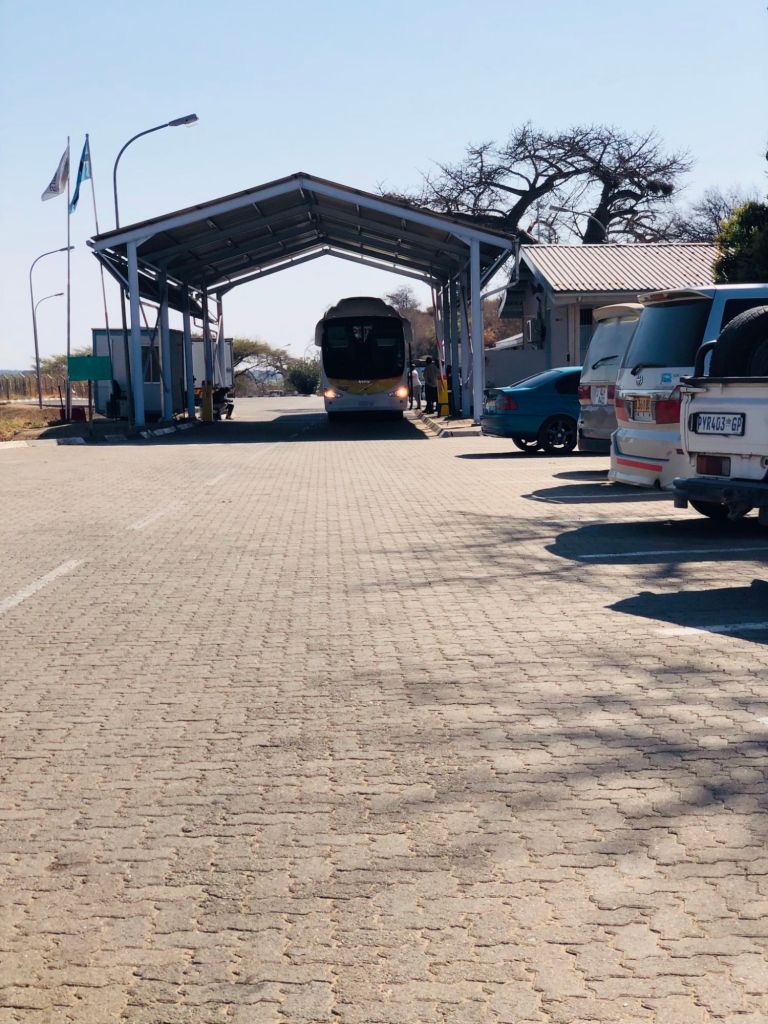
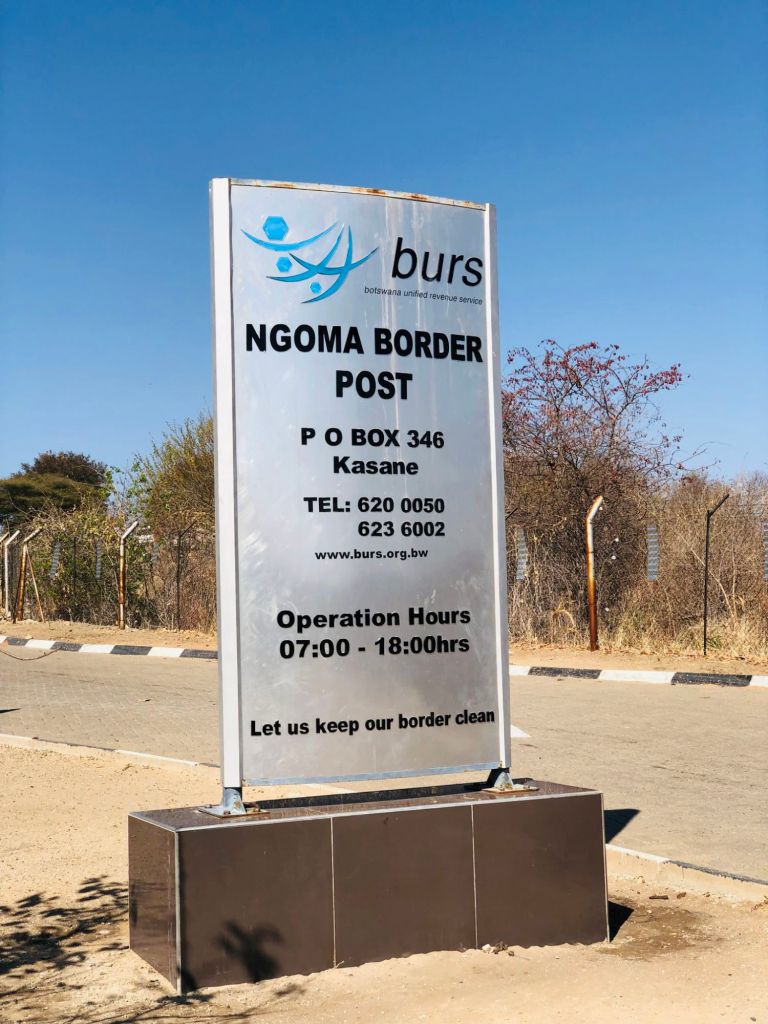
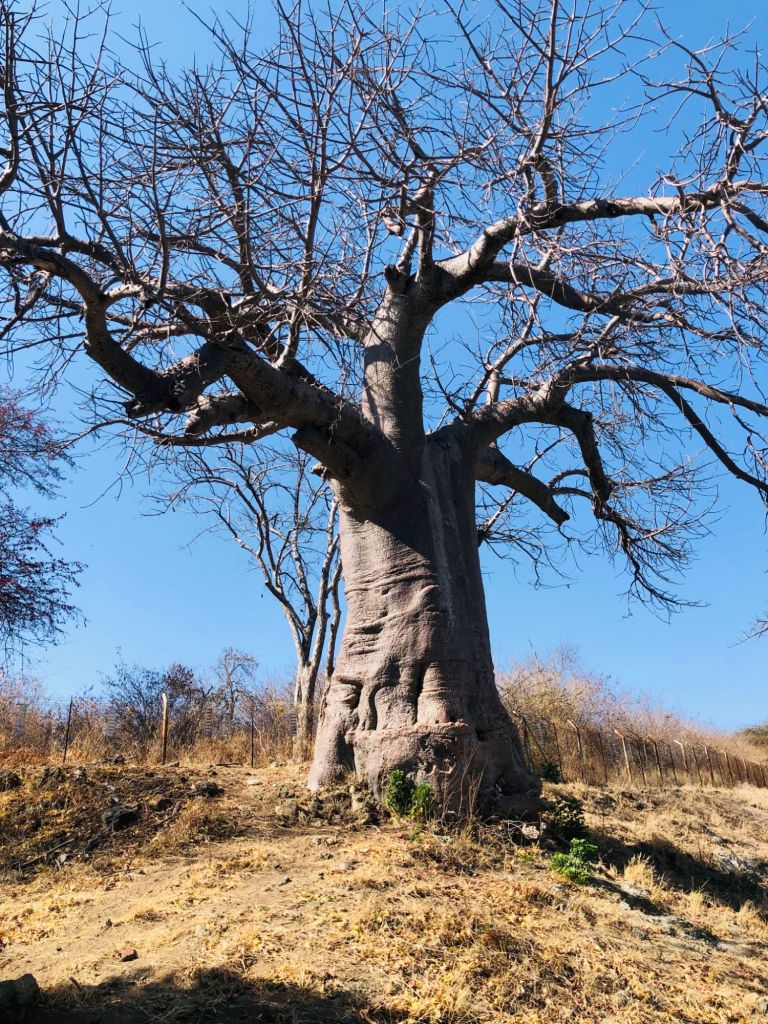
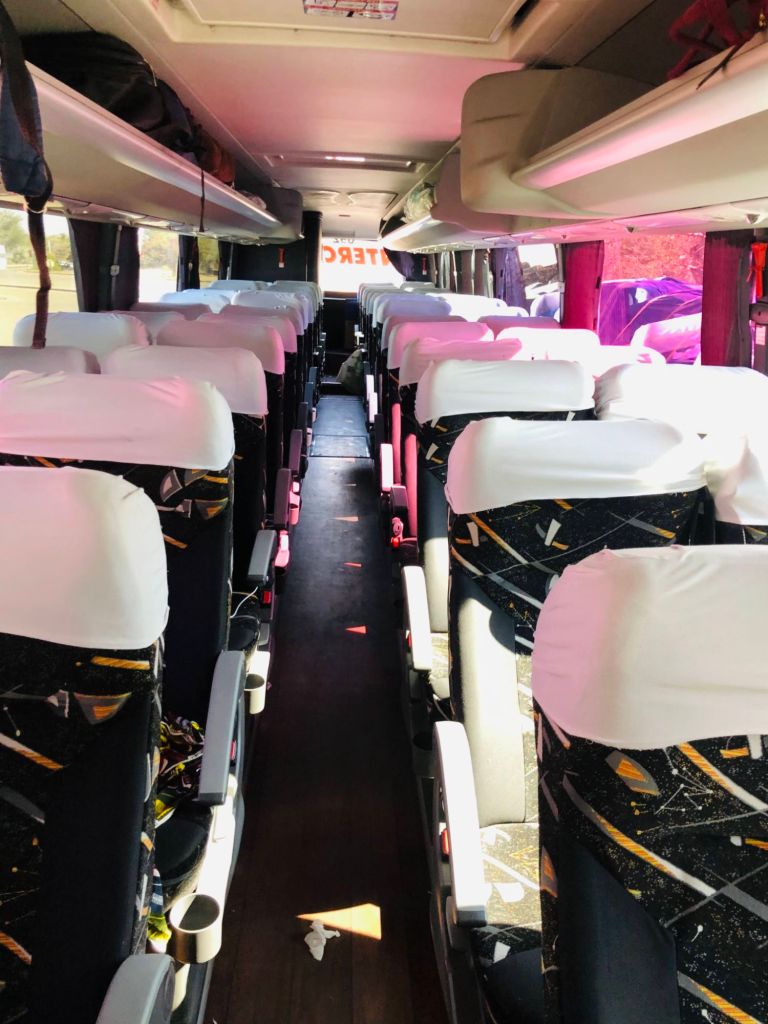
The journey from Windhoek to Livingstone is nothing if not calm and unassuming. The bus drivers are amazing, the passengers are focused only on their journey. It’s mostly dark as we drive through northern Namibia. Passing towns like Rundu, Vundu and the border town Katima Mulilo. We stop for about 30 minutes at this town as most Namibians disembark, leaving only the travellers going to Zambia. Border control is seamless and the only remaining highlight is crossing the Kazungula Bridge. The bridge is a 923 metre long, 18.5 meter wide marvel. Under it flows the mighty Zambezi River, connecting Zambia and Botswana while slightly avoiding Zimbabwe and Namibia. When we drive over the bridge everyone marvels at how wide the Zambezi River is at this point. The drivers are surely used to this reaction because they are only road weekly. From here on, we will drive for an hour and arrive in Livingstone.
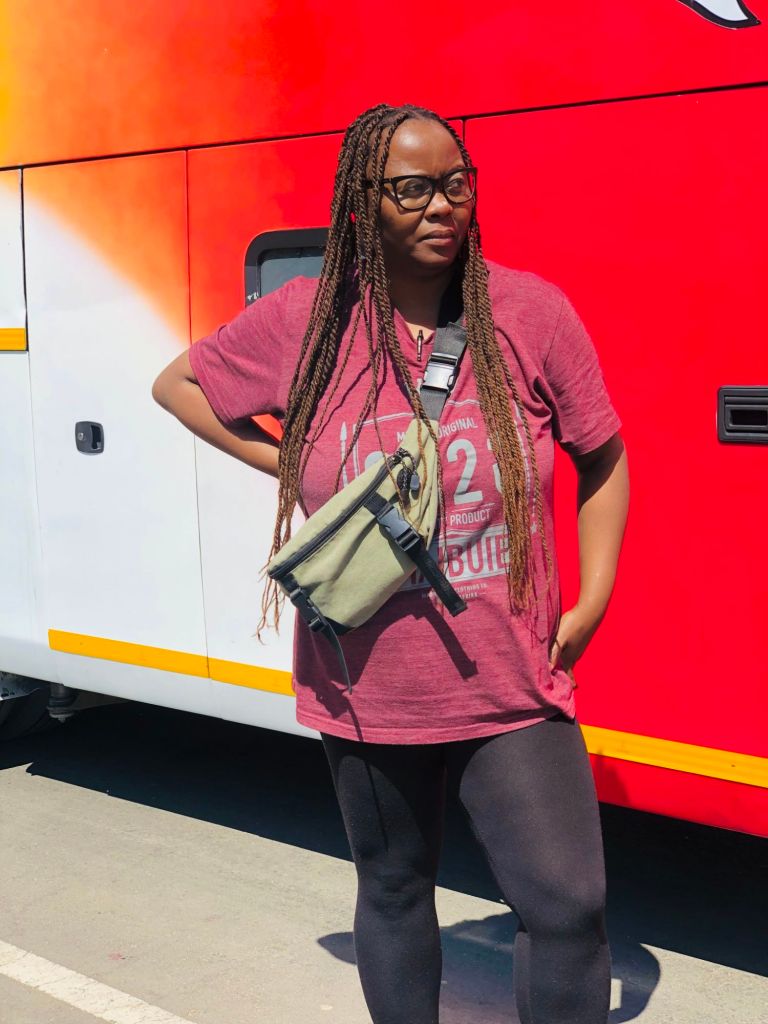
Arrival in Livingstone is also as uneventful. The tourists are already discussing their travel plans, some people are arriving home, while some of us are visitors. The drivers thank us and bid us farewell. We get off the bus, welcomed by cab drivers shouting and screaming “Taxi, madame?”

 Wanderlust Lulu
I enjoy your writing.
LikeLike
Thank you so much for reading. ♥️
LikeLike